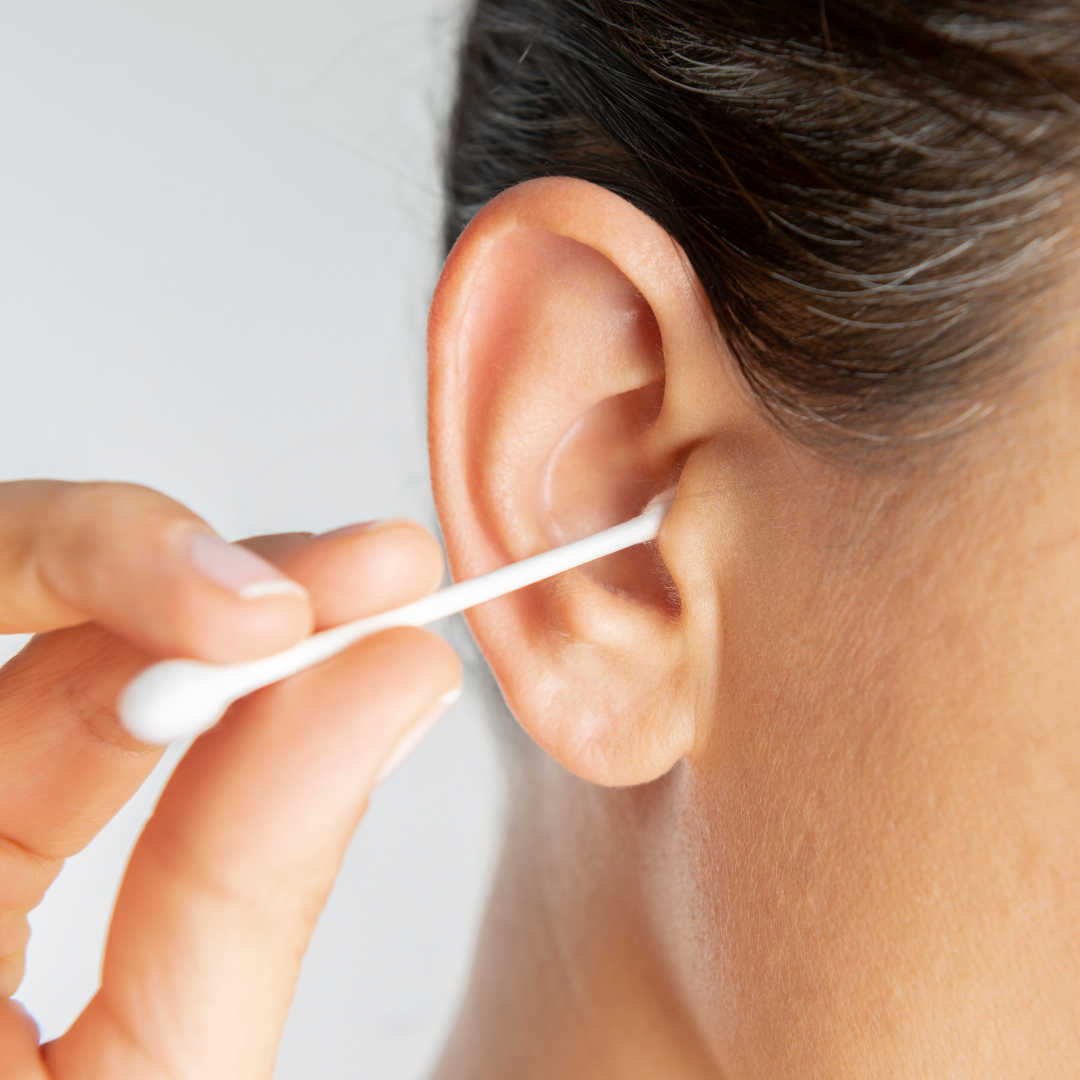
While cotton buds look like simple cleaning instruments, inserting them directly into your ear canal complicates hygiene and can injure sensitive structures. Our clinic establishes whether cerumen requires physical removal and identifies the safest protocols for your individual ear anatomy. Healthy ears rarely require aggressive manual intervention; nevertheless, when blockage develops, we assist patients in safely extracting excess cerumen.
Why Are Q-Tips Bad for Your Ears?
Human earwax, formally designated as cerumen, is a functional secretion rather than unwanted dirt. It serves by ensnaring foreign debris, discouraging bacterial invasion, lubricating skin linings, and safeguarding the inner canal. Routine chewing and epithelial cell migration continuously transport spent wax toward the concha, where it falls out or clears during bathing.
Introducing a cotton swab into the ear pathway severely disrupts the ear’s organic cleaning process. While the fibrous tip might extract superficial wax particles, it predominantly forces deeper accumulations toward the tympanic membrane. Repeated use can pack wax into a firm blockage and create the plugged sensation that encourages even more cleaning.
Although swabs can sanitize the outer folds of the auricle, they should never penetrate the delicate ear canal.
Types of Ear Injuries Caused by Cotton Swabs
The delicate dermal lining of the auditory canal is remarkably thin and susceptible to lacerations. Tiny skin lacerations provoke pain and bleeding while forming entry pathways for pathogens, multiplying the chance of external ear infections. Furthermore, the cotton fibers may separate from the stick, leaving a foreign body lodged within the canal.
Common mechanical traumas from swabs include:
- Cerumen driven into deep obstructive impactions
- Skin abrasions, tissue swelling, severe irritation, and active bleeding
- Secondary bacterial otitis externa
- Retained cotton tip or foreign object obstruction
- Traumatic puncture or laceration of the eardrum
- Dislocation or injury of the delicate hearing ossicles
- Temporary or permanent hearing changes
- Persistent tinnitus, balance instability, or severe otalgia
Even though major trauma is uncommon, someone bumping your arm, a sudden hand slip, or deep over-insertion can cause severe damage.
How Frequently Should You Remove Earwax?
Most people do not need to remove earwax on a schedule. Healthy ear physiology steadily propels wax toward the surface, where daily hygiene cleans the external ear. Scrubbing too frequently dehydrates the auditory passage, causes persistent irritation, and raises risks for secondary infections or blockages.
Intervention becomes necessary whenever wax creates an anatomical blockage, obstructs otoscopic examination, disrupts hearing aid operation, or causes aural distress.
Safe and Approved Home Techniques for Earwax Care
In the absence of earwax symptoms, allowing natural physiological clearance is universally the safest strategy. Simply cleanse the external ear using a damp, gentle washcloth, allowing the internal canal to clear independently.
When wax needs softening, we may recommend an over-the-counter cerumen-removal product or drops containing ingredients such as mineral oil, glycerin, saline, or carbamide peroxide. Administer strictly the dosage indicated on the packaging and adhere precisely to the recommended treatment duration. Discontinue the product right away if you encounter otalgia, severe dizziness, contact dermatitis, or aggravating symptoms.
Performing home ear irrigation carries distinct risks and requires prior professional evaluation and hands-on technique instructions. Never utilize motorized oral irrigators or dental water devices in the ear canal. Steer clear of dangerous tools such as ear candles, metal curettes, lighted camera tools, bobby pins, and home vacuum devices. These products may burn, cut, puncture, or push wax farther inward.
Indications for Scheduling a Professional Ear Cleaning
Set up an audiological evaluation whenever your ear stays plugged after softening care, wax is firmly impacted, or home efforts fail repeatedly. Direct clinical removal is particularly indicated when a patient cannot remain still, possesses tortuous or narrow canals, uses hearing aids, or has a history of ear surgery.
Arrange an immediate clinical evaluation for:
- Persistent otalgia, stubborn itching, or painful sensitivity around the ear
- Visible blood, purulent discharge, clear fluid drainage, or offensive ear odors
- Systemic fever or noticeable swelling around the auricle
- New tinnitus or dizziness
- Sudden reduction in hearing or auditory loss that persists after wax extraction
- Any concern of a ruptured eardrum or detached cotton swab tip
- Frequent wax buildup that occludes or damages hearing aids
Any rapid-onset hearing loss in one ear must be evaluated as an emergency rather than dismissed as a wax plug. Rapid audiological testing differentiates simple cerumen obstruction from serious, time-sensitive inner ear disorders.
How Can a Doctor Remove Excess Earwax?
First, we inspect the auditory canal under otoscopic or microscopic visualization to confirm wax occlusion and rule out infections, tissue trauma, or eardrum perforations. The ideal extraction strategy is dictated by the consistency of the wax, ear canal dimensions, clinical background, past ear procedures, and patient physical stability.
Expert removal procedures include:
- Wax-softening drops before or during the appointment
- Regulated mechanical irrigation with body-temperature saline for sealed eardrums
- Gentle micro-suction performed under clear binocular visualization
- Manual instrument clearance utilizing dedicated ear loops, fine curettes, or small forceps
Continuous visual monitoring enables the practitioner to navigate around sensitive epithelial tissue and pause immediately if discomfort arises. You may need more than one method for dry or tightly packed wax. After removal, the ear can be reexamined to confirm that the canal and eardrum are healthy. If aural fullness, ear ringing, dizziness, or auditory impairment remains after cleaning, further diagnostic evaluations can identify the root issue.
Arrange Safe In-Office Earwax Removal
Should your ears feel congested or your hearing performance decline, arrange an evaluation with our audiology clinic instead of reaching for swabs. During your consultation, we examine current symptoms, prior ear surgeries, hearing aid habits, home remedies, and physiological factors that drive wax accumulation. Reach out to our audiology clinic today to schedule your professional earwax-removal visit.