
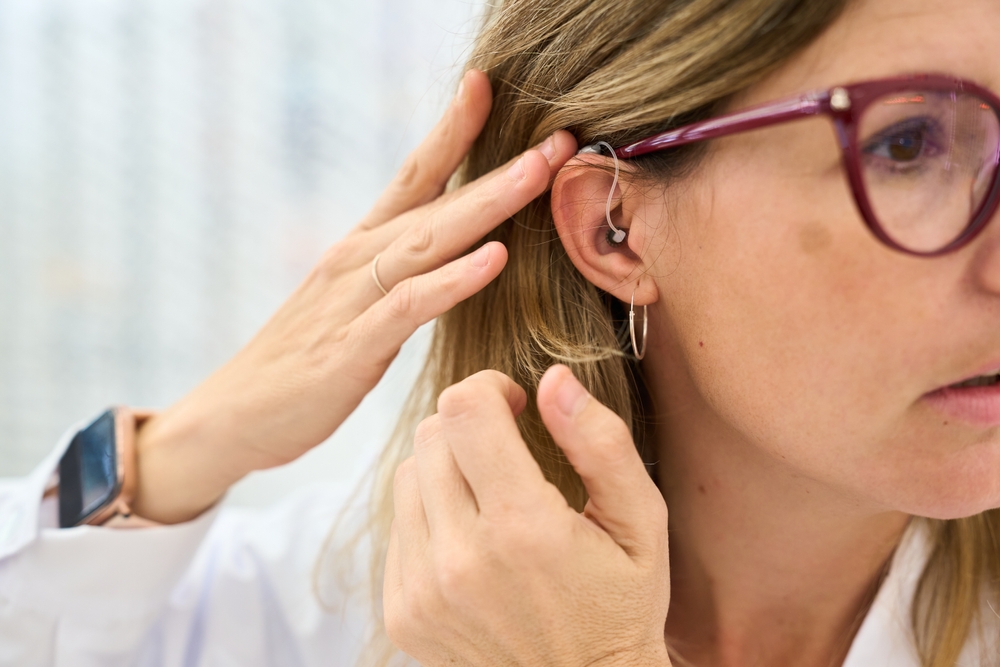
It is incredibly common for individuals to resist getting hearing instruments simply because they dread a bulky appearance or an uncomfortable fit. Historically, old-fashioned hearing hardware was bulky, obvious to onlookers, and closely linked with the stigmas of aging. Furthermore, many individuals harbored deep anxieties about social isolation, fearing others would exclude them from discussions based on assumptions of cognitive decline or profound auditory deficits.
Consequently, this outdated, negative stereotype persists, preventing numerous individuals from seeking professional care. The liberating truth is that twenty-first-century auditory tech offers a level of cosmetic elegance and physical comfort that surprises most patients. Advances in design and technology have made them smaller, more comfortable, and far more discreet.
Should your reluctance stem entirely from memories of obsolete, bulky hardware, you owe it to yourself to discover current medical advancements.
Dispelling the Myth: Modern Devices Have Transcended Older Styles
When most individuals conjure an image of assistive listening technology, they envision a massive beige plastic chassis hooked over the pinna and obvious to everyone nearby. If that description matches your mental model, your perceptions are anchored in the primitive analog technology of the late twentieth century.
In the intervening decades, the entire field of otolaryngology and acoustic engineering has undergone a massive paradigm shift. Continuous refinements in ergonomic styling, nanometer-scale circuitry, and digital audio engineering have radically overhauled the modern cosmetic profile. They’re smaller, sleeker, and designed to blend in (or disappear entirely).
A multitude of current designs fit entirely inside the physical ear canal, ensuring they remain hidden from view during normal social encounters. Others rest behind the ear but are so compact and lightweight that they’re easy to overlook, especially when matched to your hair or skin tone.
Primary Hearing Aid Styles, From Invisible to Barely There
If you are curious about the structural choices available for your rehabilitation, here is an accessible overview of current styles:
Invisible-in-canal (IIC)
This tier represents the absolute pinnacle of cosmetic concealment. An IIC device is positioned entirely past the second bend of the auditory canal, fabricated from a personalized physical matrix of your unique anatomy. During typical face-to-face communication, these custom models remain completely obscured from view. They represent an ideal intervention path for mild-to-moderate hearing impairments when user stealth is the top priority.
The Versatile Receiver-in-Canal (RIC) / Receiver-in-the-Ear (RITE) Style
This is the most common style today. The system utilizes an incredibly small housing resting behind the ear, linked by a hair-thin translucent cable to a miniature speaker within the ear pathway. At a glance, they often resemble wireless earbuds. Surrounding individuals will remain completely unaware of the technology unless they actively look for it.
Power and Performance: Behind-the-Ear (BTE)
While these models house all electronic components within a casing resting behind the pinna, their dimensions are drastically reduced compared to legacy models. They’re often recommended for more significant hearing loss and offer excellent performance without the bulky appearance people expect.
The fundamental lesson is clear: current acoustic technology is engineered to integrate seamlessly into your personal lifestyle, never to advertise an impairment.
Advanced Features: Beyond Aesthetics to Smart Technology Integration
The recent metamorphosis of hearing instruments extends far beyond mere cosmetic downsizing. In the current era, these processors operate like sophisticated wearable computers rather than simple analog sound amplifiers. Many connect directly to your phone via Bluetooth, letting you stream calls, music, or even TV audio straight to your ears with no headphones needed.
Equipped with dedicated smartphone applications, they allow users to manipulate volume matrices or toggle environmental programs without making manual physical adjustments. If you enter a chaotic, crowded room, you can optimize your digital noise reduction settings to isolate speech within seconds. Advanced rechargeable battery banks have effectively replaced the small, fragile power cells that used to cause immense frustration. You merely dock the devices on a nightstand inductive charger, exactly like replenishing your mobile phone.
Empowerment Over Hesitation: Redefining Hearing Health Care
Even with this encouraging information, taking the initial step toward treatment can induce anxiety. Acknowledging a sensory deficit and investigating rehabilitation options often forces a difficult confrontation with our own vulnerability and bodily changes. This mental hurdle can make an individual feel exposed, creating a false impression of losing authority over personal wellness.
Consider a healthier perspective: wearing a contemporary hearing system does not mean your body has failed you. Rather, they represent a proactive response to natural biological evolution—a transition shared by every human being. They’re proof that you’re taking action to support and equip your body in essential ways.
Imagine wearing a discreet, barely (if at all) visible device and finally being able to follow along in conversation, hear better in crowds, and focus on the things that really interest you. That level of sensory restoration is incredibly liberating!
Schedule Your Personal Demonstration of Today’s Top Styles
The easiest way to let go of that outdated mental image is to check out for yourself what’s available. We warmly welcome you to tour our practice, consult with our audiologists, and review our product lines with absolutely no financial or purchase obligations. View this consultation simply as a tactile opportunity to discover just how radically changed this technology has truly become.
Almost every visitor walks out completely shocked by how weightless, ergonomic, and cosmetically invisible these tools are in practice! Reach out to our administrative team or visit our website right now to book your personal demonstration.